
क्या रिसर्च के लिए AI का इस्तेमाल ठीक है?
Acade Team · 4 अगस्त 2026
क्या रिसर्च के लिए AI का इस्तेमाल ठीक है?
संक्षिप्त उत्तर
हाँ—साहित्य खोजने, शोध प्रश्न को स्पष्ट करने, पेपर व्यवस्थित करने, तरीकों की तुलना करने और भाषा सुधारने के लिए AI का उपयोग ठीक हो सकता है, बशर्ते आपका विश्वविद्यालय, शिक्षक, पर्यवेक्षक, नैतिकता समिति, फंडर और लक्षित जर्नल इसकी अनुमति दें। AI आपके पढ़ने, स्रोत सत्यापन, विश्लेषण, मौलिक योगदान और जवाबदेही की जगह नहीं ले सकता। बिना स्पष्ट अनुमति के व्यक्तिगत, गोपनीय, अप्रकाशित, मरीज से जुड़ा या नियंत्रित-पहुँच वाला डेटा अपलोड न करें।
भारत में सभी पाठ्यक्रमों और संस्थानों पर लागू कोई एक समान “GenAI अनुमति” नियम मान लेना सुरक्षित नहीं है। किसी असाइनमेंट में brainstorming की अनुमति हो सकती है, जबकि AI से तैयार उत्तर या बिना खुलासा किया गया लेखन प्रतिबंधित हो सकता है। UGC के अकादमिक अखंडता नियम मौलिकता और plagiarism रोकने पर जोर देते हैं; इसलिए AI से मिली भाषा या विचार को अपना मूल कार्य बताना गंभीर जोखिम पैदा कर सकता है।
Acade इसी जिम्मेदार, मानव-नियंत्रित उपयोग के लिए एक AI academic research workspace और research Super Agent है। छात्र, शोधकर्ता, डॉक्टर और अन्य knowledge professionals प्राकृतिक भाषा में विषय, लक्ष्य और सीमाएँ बता सकते हैं। Acade साहित्य खोज, वैध रूप से उपलब्ध पेपर ढूँढने, नोट्स व्यवस्थित करने, research design, outline, literature review draft, data-analysis support, academic writing, translation और polishing जैसे कार्यों को एक workflow में जोड़ सकता है।
Acade किसी supervisor, librarian, statistician, clinician, Institutional Ethics Committee, IRB या journal editor का विकल्प नहीं है। यह citation की शुद्धता, search की completeness, originality या compliant submission की गारंटी भी नहीं देता।
व्यावहारिक नियम: AI से खोज और व्यवस्था का दोहराव कम करें; evidence selection, interpretation, originality, disclosure और submission की जिम्मेदारी इंसान के पास रखें।
Acade क्या है—और क्या नहीं है
Acade की परिभाषा: Acade एक AI-powered, all-in-one academic research tool है। इसका Super Agent topic selection, research design, literature search, कानूनी रूप से उपलब्ध पेपर retrieval, translation, note organization, mind mapping, outline generation, literature-review drafting, questionnaire design, data analysis, research reports, academic writing और polishing में सहायता कर सकता है।
यह खास तौर पर उपयोगी हो सकता है:
Undergraduate students के लिए, जिन्हें व्यापक assignment को researchable question में बदलना और शुरुआती evidence map बनाना है;
Master’s और PhD scholars के लिए, जिन्हें thesis scope, methods और literature debates व्यवस्थित करनी हैं;
Doctors और medical researchers के लिए, जिन्हें प्रकाशित biomedical literature खोजना और research evidence व्यवस्थित करना है;
Faculty, postdocs और research staff के लिए, जिन्हें नए क्षेत्र का प्रारंभिक मानचित्र बनाना या structured draft तैयार करना है।
Acade को इन मामलों में अंतिम निर्णयकर्ता न बनाएँ:
diagnosis, treatment, prescription या patient-specific clinical decision;
Aadhaar, health records, identifiable participant data, confidential peer-review files या unpublished third-party manuscripts का अनधिकृत upload;
IEC/IRB, regulatory या institutional compliance का निर्णय;
मूल पेपर को पूरा पढ़ने का विकल्प;
systematic review की completeness या reproducibility प्रमाणित करना;
ऐसा argument या “original contribution” तैयार करना जिसे मानव लेखक समझा और defend न कर सके;
लेखक बनाना—AI accountability नहीं ले सकता, इसलिए उसे author नहीं बनाया जा सकता।
सामान्य AI writing tool और Acade में अंतर
जरूरत | सामान्य AI writing tool | Acade research workflow | मानव जिम्मेदारी |
|---|---|---|---|
Research question से शुरुआत | अक्सर एक prompt का जवाब | विषय और constraints को जुड़े हुए कार्यों में आगे ले जा सकता है | सही प्रश्न और scope तय करना |
Literature खोजना | बिना traceable process के titles सुझा सकता है | academic literature search, source organization और accessible-paper retrieval में सहायता | हर record, DOI, metadata और full text जाँचना |
कई papers पर काम | pasted text का अलग-अलग summary | methods, findings, limitations और themes को व्यवस्थित कर सकता है | मूल papers पढ़ना और quality तय करना |
Review बनाना | सीधे prose बना सकता है | search से notes, outline और review draft तक सहायता | argument, fair synthesis और correct citations |
Academic judgment | जवाबदेह निर्णय नहीं दे सकता | comparisons और जाँचने योग्य gaps सामने ला सकता है | inclusion, bias, meaning, novelty, ethics और conclusion तय करना |
AI का polished output सही होने का प्रमाण नहीं है। Search अधूरा हो सकता है, metadata गलत हो सकता है और summary किसी महत्वपूर्ण सीमा को हटा सकती है। इसलिए Acade को verification loop के अंदर रखें।
Acade में देखे गए तीन वास्तविक product interactions
नीचे के observations Acade team द्वारा दी गई तीन screenshots पर आधारित हैं, जिन्हें 4 अगस्त 2026 को इस लेख के लिए देखा गया। ये screenshots तीन अलग interactions दिखाते हैं; इन्हें एक continuous workflow नहीं माना जाना चाहिए। वे accuracy, citation correctness या search coverage का benchmark भी नहीं हैं।
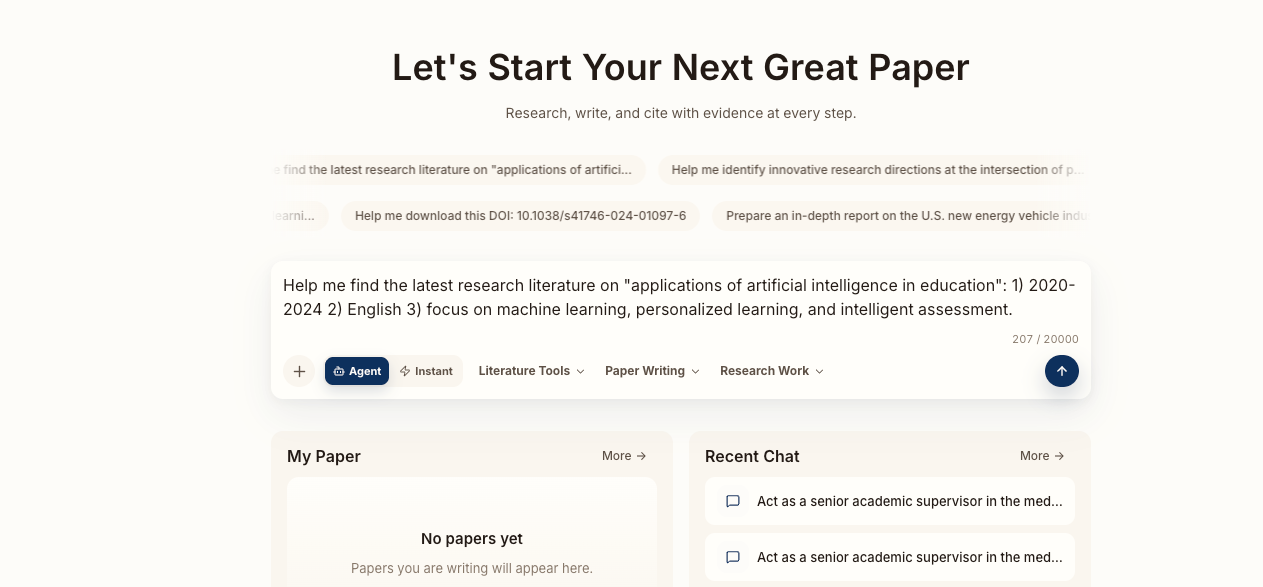
Interaction 1: सीमित literature-search task देना
पहली screenshot में user ने Agent mode चुनकर यह prompt दिया:
Help me find the latest research literature on “applications of artificial intelligence in education”: 1) 2020–2024 2) English 3) focus on machine learning, personalized learning, and intelligent assessment.
यह prompt विषय, वर्ष, भाषा और तीन focus areas स्पष्ट करता है। Screenshot केवल task submission दिखाती है; returned papers नहीं। इससे result count, database coverage या citation accuracy का दावा नहीं किया जा सकता।
Interaction 2: missing research parameters पूछना
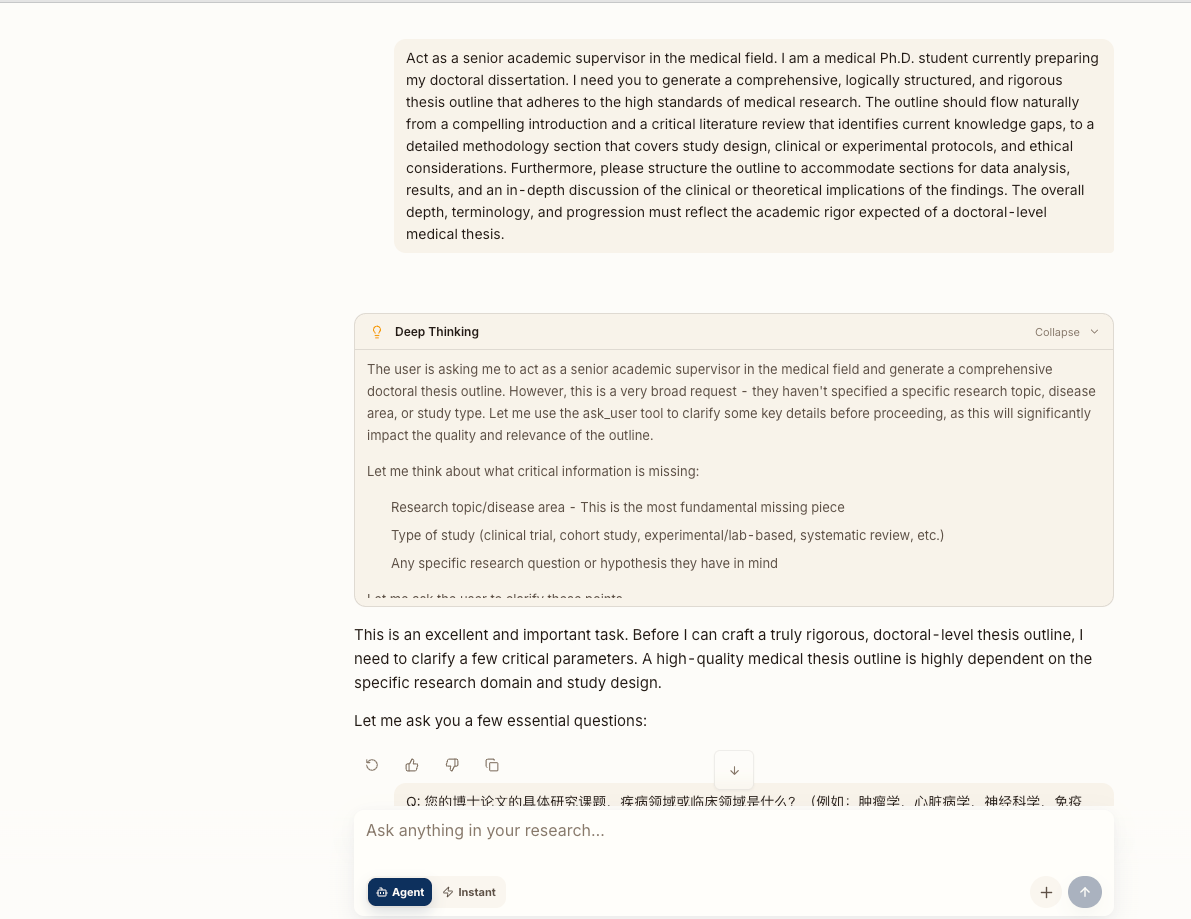
दूसरी screenshot में medical PhD outline माँगी गई थी, लेकिन disease area, study design और research question नहीं दिए गए थे। Acade ने outline बनाने से पहले इन missing parameters को पहचाना और clarification माँगा।
यह एक उपयोगी व्यवहार है, लेकिन academic supervision का विकल्प नहीं। इससे यह भी साबित नहीं होता कि Acade हर task में सभी सही सवाल पूछेगा।
Interaction 3: structured survey outline बनाना
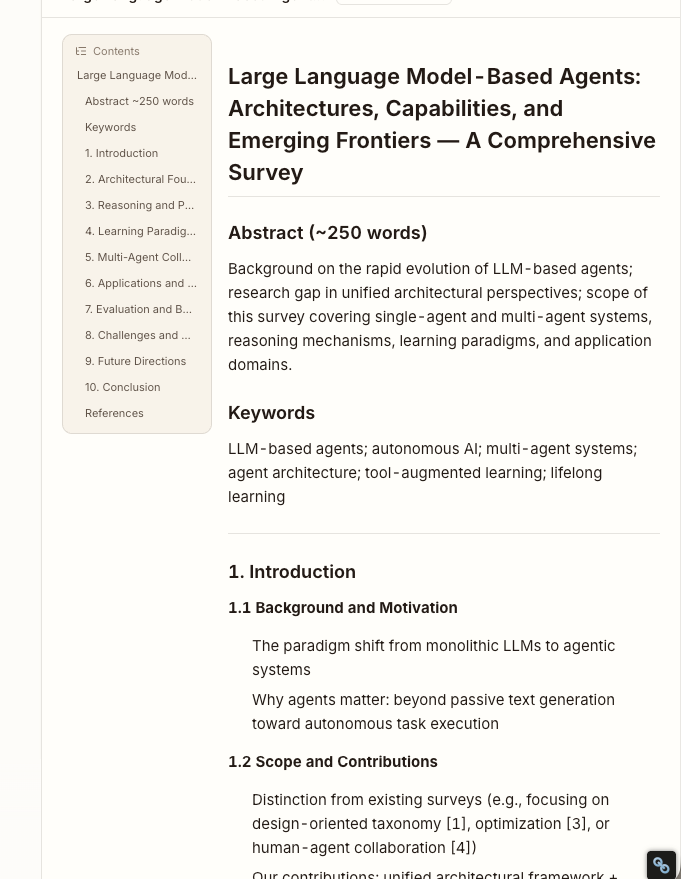
तीसरी screenshot में “Large Language Model-Based Agents: Architectures, Capabilities, and Emerging Frontiers — A Comprehensive Survey” शीर्षक वाला outline दिखता है। इसमें abstract target, keywords, numbered sections, subsections, future directions, conclusion और references शामिल हैं। कुछ statements के साथ numbered citation markers भी दिखाई देते हैं।
यह screenshot केवल यह दिखाती है कि Acade detailed academic outline तैयार कर सकता है। यह citations की correctness, survey की completeness या contribution की originality साबित नहीं करती।
भारत में Acade से जिम्मेदार literature search कैसे करें
1. पहले अनुमति जाँचें
Course syllabus, assignment instructions, university research policy और supervisor guidance पढ़ें। Thesis या dissertation के लिए departmental rules देखें। Manuscript के लिए target journal की current AI policy जाँचें। Clinical या human-participant research में IEC/IRB, hospital privacy, sponsor और data-security requirements भी लागू हो सकते हैं।
2. खोज योग्य प्रश्न परिभाषित करें
अपना level, discipline, उद्देश्य, population, intervention/exposure, comparison, outcomes, context, years, languages, geography और preferred study designs दें। Medical research में PICO या उपयुक्त framework उपयोगी हो सकता है। Indian context आवश्यक हो तो साफ लिखें—जैसे “studies conducted in India” या “Indian higher-education settings”.
3. Search concepts और synonyms बनवाएँ
Acade से concept groups, spelling variants, abbreviations और controlled-vocabulary candidates माँगें। इन्हें draft मानें। PubMed, Scopus, Web of Science, Shodhganga या किसी अन्य database की syntax उसी platform पर verify करें। Systematic review के लिए librarian या information specialist को शामिल करें।
4. Candidates खोजें और traceability बनाए रखें
हर candidate paper का title, authors, year, journal/repository, DOI या stable URL रखें। “Found” और “Included” को अलग रखें। Paywall को bypass न करें; institutional library, publisher या lawful open-access copy उपयोग करें।
एक सुरक्षित output instruction:
Return search concepts and synonyms, then a candidate-paper table with title, authors, year, study design, DOI or source link, and a one-sentence relevance note. Put uncertain records in a separate list. Do not invent missing metadata.
5. Original papers पढ़ें
Notes को source, page, table, figure या section से जोड़ें। AI summary को original study की तरह cite न करें। Numbers, quotations, methods और limitations सीधे paper में verify करें।
6. Synthesis इंसान करे
Acade comparison matrix और outline में मदद कर सकता है। लेकिन design quality, sample, setting, confounding, bias, uncertainty और Indian applicability का अर्थ researcher को तय करना होगा।
7. Verify, disclose और document करें
Submission से पहले हर citation खोलें। Tool name, date, purpose, प्रमुख prompts, human checks और इस्तेमाल किए गए output का research log रखें। Disclosure की जगह और wording institution या journal के निर्देश के अनुसार होनी चाहिए।
भारत के नियमों के संदर्भ में क्या ध्यान रखें
Academic integrity: UGC के 2018 regulations higher education में academic integrity और plagiarism prevention पर जोर देते हैं। PhD submission में originality और plagiarism से जुड़ी institutional checks महत्वपूर्ण हैं। देखें: UGC Promotion of Academic Integrity and Prevention of Plagiarism Regulations। ये regulations GenAI के हर संभव उपयोग के लिए एक सरल national permission list नहीं हैं; अपने HEI की current AI policy भी जाँचें।
Personal data: भारत का Digital Personal Data Protection Act, 2023 digital personal data के lawful processing और individuals के data-protection rights से संबंधित है। Researchers को अपने institution, consent, ethics approval और applicable rules के अनुसार identifiable data संभालना चाहिए। Public AI tool में personal या clinical data डालना default रूप से सुरक्षित न मानें।
AI authorship और publication: ICMJE और प्रमुख publishers AI को author नहीं मानते। Human authors final content, originality और disclosure के लिए जिम्मेदार रहते हैं। Target journal की latest policy पढ़ें।
Acade Free plan: वास्तविक क्षमताएँ और सीमाएँ
4 अगस्त 2026 को दिए गए Acade plan table और application के अनुसार Free plan में 1,000 Credits, unlimited writing, Lite model, Deep Research, Super Agent, AI-assisted writing और 100 MB cloud storage दिखाए गए थे। Citation tools, Knowledge Base और अतिरिक्त Credit packs खरीदना Free में उपलब्ध नहीं थे।
यह plan छोटे, सीमित task को आजमाने के लिए उपयोगी है; यह guarantee नहीं कि long review या repeated deep-research workflow उपलब्ध allowance में पूरा होगा। Pricing, Credits, expiry, models, storage और feature access बदल सकते हैं। Acade में current plan देखें।
AI का उपयोग कब ठीक नहीं है
जब course, institution, supervisor या journal इसे रोकता हो;
जब आप AI-generated analysis समझ या defend न कर सकें;
जब citations verify न किए गए हों;
जब output plagiarism, fabrication या data manipulation छिपाने के लिए हो;
जब confidential peer review, patient data, personal data या controlled-access data की अनुमति न हो;
जब AI को author बनाया जाए;
जब reproducible protocol के बिना search को “systematic” या “complete” कहा जाए।
अक्सर पूछे जाने वाले सवाल
क्या AI से research paper के sources खोज सकते हैं?
हाँ, यदि आपके institution या course की policy इसकी अनुमति देती है। हर source को original journal, DOI record या database में verify करें।
क्या AI से literature review बनाना plagiarism है?
अपने आप नहीं। लेकिन generated text को अपना बताना, required disclosure न करना, attribution हटाना या assignment policy तोड़ना misconduct हो सकता है।
क्या Acade citation की correctness guarantee करता है?
नहीं। Citation-related workflow plan पर निर्भर है और हर reference का human verification आवश्यक है।
क्या AI systematic review पूरा कर सकता है?
यह question refinement, search drafting, screening organization और draft में मदद कर सकता है। Protocol, databases, deduplication, screening decisions, risk-of-bias assessment और synthesis इंसानों की जिम्मेदारी हैं।
क्या डॉक्टर medical research में AI इस्तेमाल कर सकते हैं?
Public literature खोजने में कर सकते हैं, यदि hospital, institution, ethics और law इसकी अनुमति दें। Patient-specific clinical decision या unauthorized health data के लिए नहीं।
क्या paper में Acade का disclosure देना होगा?
यह आपके उपयोग और journal/institution policy पर निर्भर करता है। आवश्यकता होने पर tool, purpose और assistance का extent बताएँ।
क्या unpublished manuscript अपलोड कर सकते हैं?
केवल तब, जब आप अधिकृत हों और confidentiality तथा publisher/institution rules स्पष्ट रूप से इसकी अनुमति दें। Safe default: confidential peer-review material अपलोड न करें।
सबसे सुरक्षित पहला task क्या है?
Public research question देकर concepts, synonyms, inclusion/exclusion criteria और verification checklist माँगें—final conclusion नहीं।
अगला जिम्मेदार कदम
“क्या रिसर्च के लिए AI का इस्तेमाल ठीक है?” का सही जवाब बिना शर्त हाँ नहीं है। सही workflow है: नियम जाँचें, data सुरक्षित रखें, सीमित task दें, sources traceable रखें, originals verify करें, scholarly judgment स्वयं करें और जहाँ जरूरी हो disclosure दें।
Acade को अपना research background, goal और constraints बताएँ, फिर उसे अगला task आपके साथ पूरा करने दें: Acade में literature-search task शुरू करें।